Fair Work Redundancy Pay Table 2026: Weekly Cap, Age Bands and Maximums
See the 2026 statutory redundancy pay bands, weekly cap, and maximum payment, plus how to use a fair work redundancy pay table correctly.
Need the numbers now?
Use the Redundancy Pay Calculator
Get an instant estimate in your browser before you read the deeper guidance below.
If you are searching for a fair work redundancy pay table 2026, you are usually trying to reduce redundancy law to one page of numbers. That is helpful, but only up to a point. A table can show the age bands and cap. It cannot tell you on its own whether the employee qualifies, what weekly pay figure to use, or whether enhanced redundancy terms apply.
So the right approach is to use the table for orientation, then plug the actual facts into a calculator.
The 2026 statutory redundancy table
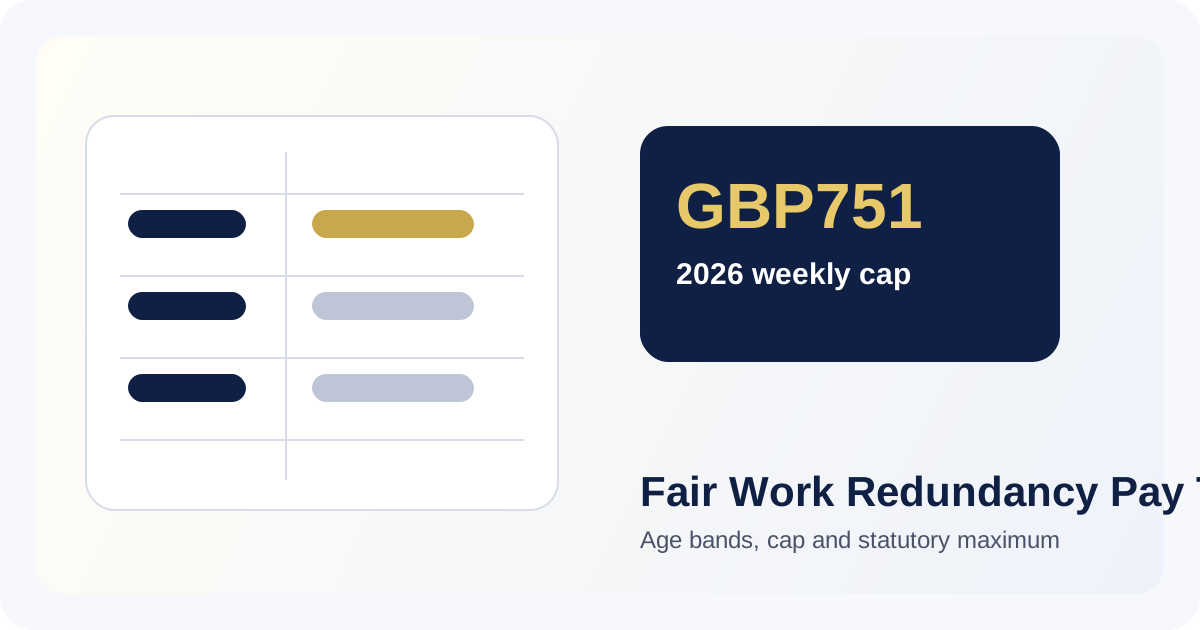
GOV.UK states that for dismissals on or after 6 April 2026, statutory redundancy pay uses a weekly pay cap of GBP751 and a maximum statutory redundancy payment of GBP22,530.
The age-banded table is:
| Age during each full year of service | Statutory factor |
|---|---|
| Under 22 | 0.5 week’s pay |
| 22 to 40 | 1 week’s pay |
| 41 and over | 1.5 weeks’ pay |
Two more rules matter:
- service is capped at 20 years
- weekly pay is averaged and then capped by law
Why the table is only part of the answer
A redundancy pay table is useful because it shows the multipliers clearly. But the final number still depends on:
- the employee’s age in each year counted back from dismissal
- how many full years of service count
- whether continuity is disputed
- what the average weekly pay was in the 12 weeks before notice
That is why two employees on similar salaries can receive very different outcomes.
2026 rates in practical terms
The weekly cap means a high earner does not receive unlimited statutory redundancy pay. Once weekly pay reaches the legal limit, the statutory minimum stops growing even if real earnings are much higher.
That matters most for:
- long-serving employees
- older employees in the 1.5-week age band
- employers budgeting for multiple redundancies
Use the Redundancy Pay Calculator to turn the table into an actual figure.
Worked example using the table
Suppose an employee:
- is 45 at dismissal
- has 10 full years of service
- has weekly pay above the statutory cap
If all 10 years fall into the 41-and-over band, the statutory multiplier is:
10 x 1.5 = 15 weeks
At the 2026 weekly cap of GBP751:
15 x 751 = GBP11,265
That example shows why the cap matters. A much higher real weekly salary would not increase the statutory figure above that calculation.
What a fair work redundancy pay table will not show
Tables are not good at showing:
- disputes about start dates
- TUPE continuity issues
- contractual enhanced redundancy
- whether notice pay and holiday pay are being confused with redundancy pay
That is why a good redundancy process should always include a written breakdown, not just a headline figure.
Where the 2026 numbers come from
The statutory framework and current cap are set out on official government pages such as Redundancy: your rights - redundancy pay and the employer guidance on making staff redundant.
For employees and employers alike, it is safer to use those primary sources than a random blog image or spreadsheet shared online.
Frequently Asked Questions
What is the statutory redundancy pay weekly cap for 2026?
For dismissals on or after 6 April 2026, GOV.UK states that the weekly cap is GBP751. That cap limits the weekly pay figure used in the statutory calculation.
Does the fair work redundancy pay table 2026 include notice pay?
No. A redundancy pay table only helps with the statutory redundancy element. Notice pay, holiday pay, and any enhanced package sit alongside it, not inside it.
Is the 2026 redundancy pay table enough on its own?
No. You still need to know service length, age banding, and average weekly pay before you can produce the actual result.
What is the maximum statutory redundancy payment in 2026?
GOV.UK states a maximum statutory redundancy payment of GBP22,530 for dismissals on or after 6 April 2026.
The Bottom Line
A fair work redundancy pay table 2026 is useful for checking the age bands, weekly cap, and statutory maximum, but it is not the whole calculation. Use it as a reference point, then use the Redundancy Pay Calculator to work through the employee’s actual service and pay details.